


Your House: Dark Mystery
4.59.00 Reviews
App Specs
- Version
- 1.1.9
- Updated On
- License
- Free
- Downloads
- 10,000+
- Developer
- Patrones & Escondites
- Categories
- Adventure
- Platform
- Android
Screenshots
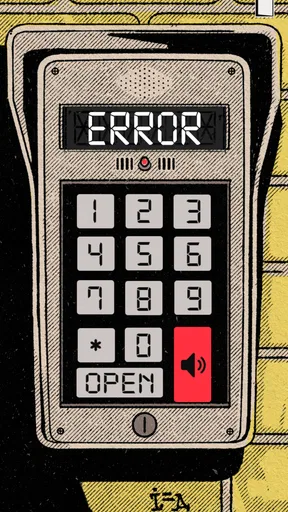
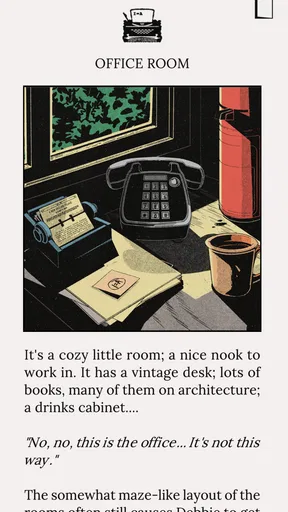


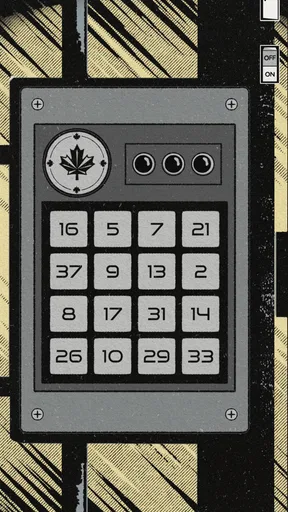
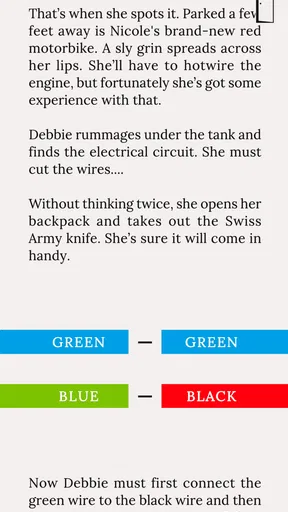


 Analysis by AppCompare
I went into Your House: Dark Mystery expecting a compact adventure game with a moody tone, but what stayed with me was the way it turns ordinary investigation into a steady test of attention. Developed by Patrones & Escondites, this free noir mystery puts its puzzles at the center of the experience, using each discovery to make the surrounding story feel less comfortable. I would describe it as a game for players who enjoy looking twice, remembering small details, and accepting that a mystery is more satisfying when it does not explain itself immediately.
Its presentation is built around tension rather than spectacle. The appeal is not simply reaching the next scene; it is wondering what a clue means, whether an apparently harmless detail matters, and how much of the situation can be trusted. That makes it a natural fit for a quiet evening or a short session when I want something more thoughtful than a fast action game. It is available free, with optional in-app purchases priced at $5.49 per item, so the basic decision is easy: try it first, then decide whether the extra spending suits the way you play.
How Your House: Dark Mystery feels in everyday play
I find the everyday appeal of Your House: Dark Mystery depends less on how long I play than on how carefully I pay attention: a short, focused visit can be more satisfying than a distracted stretch. I’d use a natural pause to jot down the last clue that changed my thinking, so returning feels like picking up an investigation rather than starting over mentally. That habit also makes the game’s feedback and sense of progress easier to judge.
A measured start that rewards patience
The first thing I noticed was that this is not the kind of adventure I would recommend rushing through. Its noir mood works best when I slow down and treat every puzzle as part of the investigation rather than as a barrier between story scenes. The game’s store summary promises a darker truth behind each puzzle, and in practice that idea gives the solving process a useful sense of purpose. I am not just matching pieces or tapping until something opens; I am trying to understand why the discovery matters.
That approach also shapes my expectations about speed. This is a game where mental progress matters more than rapid input, so a session can feel deliberately paced even when the device itself is responding normally. If you prefer immediate action, constant movement, or quick rewards, the opening may seem restrained. If you like atmospheric mysteries, the slower rhythm gives you room to form theories and notice connections.
A realistic use case is a late commute or a quiet break at home. I can play for a while, stop after reaching a natural clue or puzzle, and return later without needing the game to deliver a dramatic action sequence every few minutes. The best sessions are the ones in which I give myself enough attention to remember what I have seen. Playing while distracted makes the experience feel more confusing than mysterious.
What makes the puzzles worth working through
The strongest reason to stay with this adventure is the relationship between solving and storytelling. A puzzle is more enjoyable when it changes how I view the setting, and the noir framing encourages me to read objects and locations as evidence instead of decoration. That is a more satisfying loop than the usual adventure formula in which puzzles feel like unrelated locks placed in front of the next chapter.
Worth Reading Before You Choose

EA SPORTS FC Mobile 26 Is a Bigger Football Game, but It Takes Time

Flipboard Shows What News Apps Must Do Beyond the Feed

Switching to Android Auto Means Rethinking Your Driving Routine

Google Calendar Makes a Crowded Week Easier to Manage

Ludo King Makes the Most of the Minutes Between Plans

Baby Panda World Brings Quick Play to Modern Phones, but Its Game Library Feels Busy
My practical advice is to keep a small note of unusual details while playing. I would write down a symbol, a suspicious phrase, or the order in which something appears before trying to solve it from memory. This is not about turning the game into homework. It simply prevents the common mistake of tapping through clues and then blaming the puzzle when the real problem is that I forgot an earlier detail. For this particular mystery, active observation is more useful than speed.
Another helpful habit is to pause before using a likely answer. I try to ask what the clue is communicating, not merely which option looks correct. That extra moment can reduce random attempts and makes the eventual solution feel earned. It also helps preserve the atmosphere: guessing repeatedly can flatten a tense scene into a mechanical exercise.
Where it differs from familiar adventure alternatives
Compared with action-adventure games, this one places far less emphasis on reflexes and much more on interpretation. You are unlikely to choose it because you want combat, elaborate movement, or a large world to roam freely. Compared with casual hidden-object games, its darker framing gives clues more narrative weight, although players who want a relaxed visual search may find the thriller tone less comfortable.
It also differs from a purely linear story game. Here, I have to participate in the investigation instead of simply watching events unfold. That is a strength when I want agency, but it can become a weakness if I prefer a guaranteed flow with no chance of getting stuck. Players who dislike revisiting clues or reconsidering an assumption may be happier with a straightforward interactive story.
The game’s audience rating is Everyone, which makes it broadly approachable from a content-label perspective. That should not be confused with a promise that every player will enjoy the mood. A noir mystery can feel psychologically uneasy even without relying on action, and younger or more sensitive players may still prefer something lighter. I would choose it for someone who enjoys suspenseful problem-solving, not simply for someone looking for any game without a restrictive age label.
Speed during longer or more demanding sessions
For ordinary play, I would judge the experience by how quickly the game lets me examine clues, move between decisions, and continue after solving something. The design benefits from a calm pace, but that also means interruptions are more noticeable. When I am deeply focused on a sequence, a pause caused by loading or a moment of hesitation can break the tension more than it would in a simple arcade game.
Heavy use is most likely to feel demanding when I remain in the game for a long stretch, repeatedly inspect details, or move through several story developments without a break. I would not treat a single slow moment as a serious flaw in a mystery game; atmosphere often involves deliberate pauses. The more important question is whether the delay prevents me from understanding what to do next. If the game remains readable and responsive, a measured tempo feels intentional. If the interface makes me repeat an action, frustration rises quickly.
I also recommend closing other demanding apps before a longer session on an older phone. That is a sensible precaution for any visual adventure, especially when the device has limited free memory. I would not install it expecting it to behave like a tiny text-only game simply because its focus is on puzzles. Its presentation still has to load scenes and interactive elements, so a little preparation can make the session smoother.
Stability, interruptions, and recovering your place
Reliability matters more in a mystery than many players expect. Losing progress is not just inconvenient; it can force me to repeat an investigation and weaken the connection between a clue and the conclusion that follows. My preferred way to play is to stop at a clear transition rather than closing the app in the middle of an important discovery. That habit gives the game a better chance of restoring the session in a sensible state and makes it easier for me to remember where I was.
If an interruption occurs, I would first return to the same scene and review the available clues before trying to advance. In a puzzle adventure, the quickest recovery is often mental rather than technical: reconstruct the last confirmed fact, identify the next unresolved question, and avoid random tapping. This is one of the hidden advantages of keeping notes. They make recovery less painful if a phone call, notification, or accidental exit breaks the session.
I would also avoid treating repeated attempts as a substitute for understanding. If a puzzle does not move forward after a restart, I would check the clue sequence and my interpretation before assuming the game is unstable. That distinction matters. A mystery can feel unresponsive because I missed a condition, while a genuine technical problem usually affects the broader interaction. Separating those possibilities saves time and prevents unnecessary frustration.
Device fit and practical limitations
The game supports Android devices running version 6.0 or later, which gives it a wide compatibility range. Still, operating-system compatibility is only the starting point. Older hardware may handle the experience differently from a recent phone, particularly during scene changes or longer sessions. I would leave some storage available, keep the system updated where practical, and avoid judging performance while the phone is already overloaded by background tasks.
Resource demands are also connected to how you play. A short investigation with regular breaks is easier on a modest device than an uninterrupted evening session. If the phone becomes warm, the interface feels less consistent, or battery use becomes uncomfortable, I would pause rather than forcing a long run. That is especially sensible for a game built around concentration: tired hardware and tired attention create the same kind of annoyance.
Tablet users may appreciate the extra space for examining clues, while small-screen phone users should be prepared to look carefully at details rather than playing from a distance. I would not choose this title for a device with a cramped display if visual inspection is already difficult for you. The game’s appeal depends on noticing information, so screen comfort is more important here than it would be in a simple menu-driven title.
Storage planning is another practical point. I would not assume that a free game has no installation footprint or that optional purchases are the only thing worth considering. Before downloading, I would make sure the device has room for the app and normal system activity. That small check is particularly useful on an older phone where a nearly full storage drive can make every app feel less reliable.
Free entry, optional spending, and value
The free price makes it easy to test whether the noir style suits you. I like that arrangement for a story-led adventure because the decision to spend can come after I understand the tone, puzzle rhythm, and level of patience it demands. The optional purchases are listed at $5.49 per item, so I would treat them as a deliberate choice rather than an automatic part of the installation.
My advice is to play without buying anything until you know what kind of player you are in this game. If you enjoy taking your time, solving clues independently, and returning to an unfolding mystery, optional spending may feel worthwhile. If you mainly want a quick distraction, paying more will not change the fact that the core experience asks for attention. The value comes from engagement with the investigation, not from simply unlocking access to more screen time.
There is also a useful trade-off between convenience and satisfaction. Any purchase that reduces friction may appeal when I am stuck, but solving a difficult section on my own is part of the reward. I would avoid spending impulsively during a frustrating moment. Taking a break, rereading the clues, and returning with a clear head is often better for both the mystery and the wallet.
Who should install it, and who should skip it
I would recommend it to players who enjoy atmospheric adventure games, clue-based progression, and stories that become more unsettling as the investigation deepens. It suits someone who likes to play alone, keep track of details, and accept that the game may not explain every implication immediately. It is also a good choice for a player who wants something more involving than a casual time-filler but less reflex-driven than an action title.
I would skip it if your priority is fast combat, open exploration, competitive play, or a constant stream of obvious rewards. I would also be cautious if you become irritated by puzzles that require you to remember earlier information. In that situation, a more guided narrative game would probably be a better match. The same applies if you want a bright, relaxing atmosphere; the noir direction is central to the experience rather than a thin visual theme.
The game has attracted an average rating of 4.5 from around 119 ratings, with around 9 written reviews, and has passed 10K+ installs. Those figures suggest a modest but interested audience rather than a mass-market phenomenon. I would read that as a reason to approach it on its own terms: its appeal is specific, and players who connect with its mystery-first design may value it more than people looking for a broad, universally accessible adventure.
My performance verdict after living with its design
My overall impression is that the game’s perceived speed is shaped more by deliberate investigation than by frantic activity. That is good news for players who want a thoughtful thriller, but it means the title should not be judged by the standards of an arcade game. The biggest performance advantage is that its structure gives me natural stopping points. The biggest practical risk is losing focus, because a distracted session can make both the story and the puzzles feel slower than they really are.
Version 1.1.9 gives the game a clearly identified current build, and the release date of March 27, 2025 places it as a relatively recent addition to the adventure space. I would still keep expectations realistic on older hardware: meeting the minimum operating-system requirement does not guarantee identical comfort on every device. A recent phone should be the safer choice for longer sessions, while a supported older device may be better suited to shorter investigations with breaks.
What I appreciate most is that the game asks me to participate in the mood. Its darker tone is not separate from the puzzles; it changes how I read them. That makes the experience more memorable than a collection of disconnected challenges, but it also means I cannot play it carelessly and expect the same effect. The best way to enjoy Your House: Dark Mystery is to treat each clue as part of the story, not as an obstacle to skip.
My final recommendation is positive, with a clear condition: choose it for the mystery, not for speed. The free entry point makes trying it low-risk, the Everyone rating keeps its formal age category broad, and the developer Patrones & Escondites has built an experience aimed at patient puzzle solvers. I would install it for a quiet evening, keep notes nearby, take breaks during longer sessions, and wait before considering an optional purchase. For me, that combination of atmosphere, investigation, and measured pacing is exactly what gives this small adventure its identity.
Pros
- Atmospheric visuals create a convincing haunted-house experience.
- Puzzles offer varied challenges beyond simple item collection.
- The mystery unfolds through clues that encourage careful exploration.
- Offline play makes it convenient for gaming without an internet connection.
- The dark setting and sound design build tension effectively.
Cons
- Some puzzles provide limited guidance and may feel unclear.
- Progress can depend on finding small objects in cluttered areas.
- The story may feel brief for players seeking a longer adventure.
- Dark scenes can make important details difficult to spot on small screens.
- Certain interactions and movement controls may take time to master.
FAQs for Your House: Dark Mystery
What is Your House: Dark Mystery about?
Your House: Dark Mystery is a story-driven adventure and puzzle game centered on a mysterious house filled with hidden secrets. You investigate rooms, examine objects, solve riddles, and make progress by connecting clues together. The experience focuses on atmosphere and discovery, so it is best suited to players who enjoy suspenseful narratives, exploration, and brain-teasing challenges rather than fast-paced action.
How does the gameplay work in Your House: Dark Mystery?
The game combines interactive fiction, exploration, and escape-room-style puzzles. You read parts of the story, inspect locations, collect useful information, and use logic to unlock new areas or understand what happened inside the house. Some clues may be easy to overlook, so careful reading and revisiting earlier details are important. Progress generally depends on observation and reasoning instead of combat or reflexes.
Is Your House: Dark Mystery suitable for children?
Suitability depends on the child’s age and sensitivity to suspenseful themes. Your House: Dark Mystery is not a traditional horror game built around constant jump scares, but it does include a dark mystery, unsettling situations, and a tense atmosphere. Parents should review the store rating and content information before downloading it, particularly if the player is sensitive to frightening stories, danger, or mature narrative themes.
Does Your House: Dark Mystery require an internet connection?
The basic investigation and puzzle experience may be playable without a continuous internet connection, but this can depend on the version installed and the platform’s current requirements. An internet connection may still be needed for the initial download, updates, advertisements, cloud features, or in-app purchases. It is a good idea to check the official Google Play or App Store listing before relying on offline access.
Is Your House: Dark Mystery free to download, and are there purchases?
Your House: Dark Mystery can generally be downloaded without an upfront purchase, although availability, advertising, and optional in-app purchases may vary by platform or region. Players should check the store page for the latest pricing details before installing. If the game offers hints or premium content, these purchases are optional, but they may be useful when a puzzle becomes particularly difficult.


